
 Marquette, MI – October 16, 2019 – Here’s something you may not know about me – I love to cook. I’ve always loved food and over the years that love of food has turned into a love of making food. Maybe this can be explained by my 100% Italian heritage, who knows.
Yesterday after my workout I stopped into Super One in Marquette. I went over to the meat selection and found a big ol’ T-Bone steak on sale. I picked that up, along with some mushrooms, fettuccine, and some alfredo sauce. My goal for the evening was to make a great meal – some steak, fettuccine alfredo, mushroom and onion, and salad.
For this post, I’m going to focus on my method of cooking the steak. The method is known as the “reverse sear.”
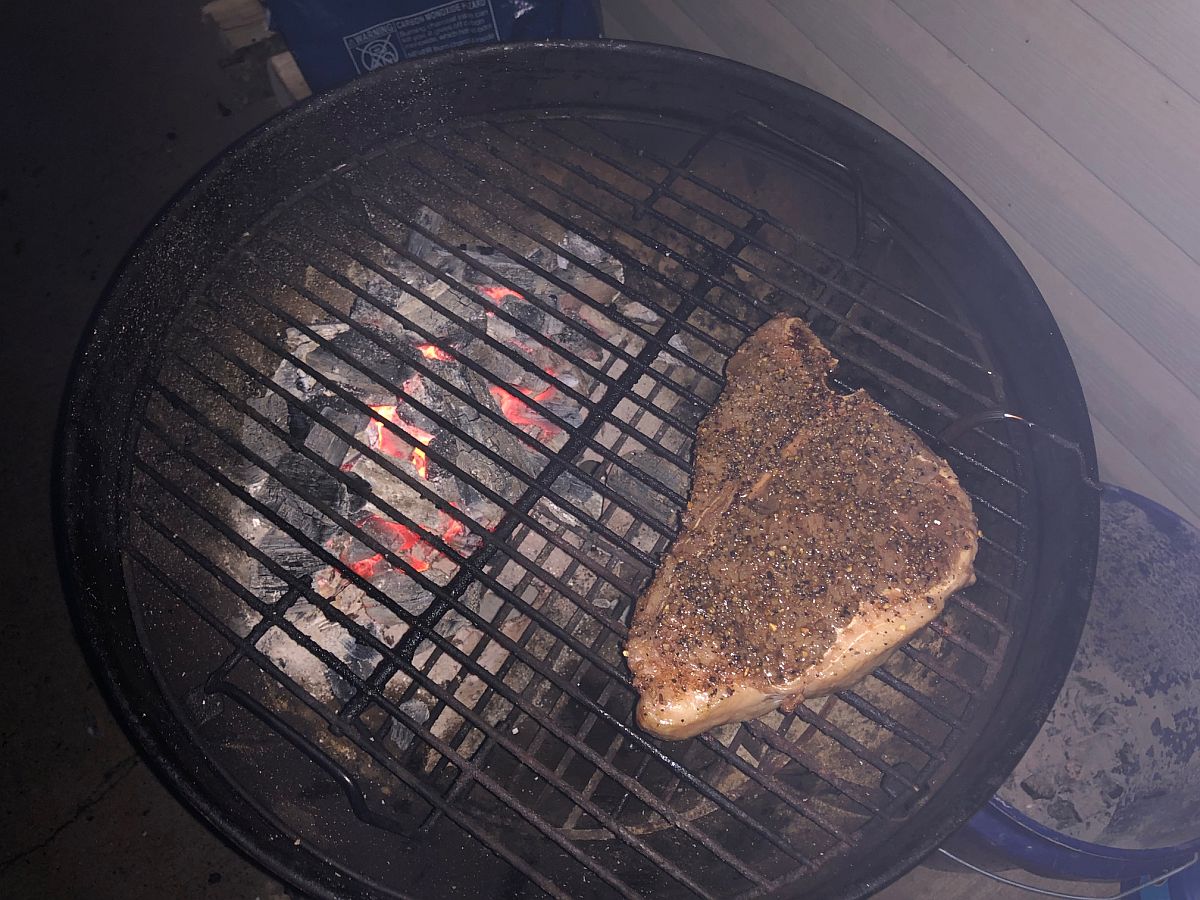
Normally when you think about cooking a steak, whether it is on a charcoal or gas grill, it’s usually done on direct heat. The reverse sear utilizes indirect heat for the majority of the cook. The first thing to do is set up your charcoal grill for indirect heat. I used my chimney starter full of lump charcoal to get the coals nice and white hot. I then added the coals, and banked all of them to one side of the grill, and left the
other side bare.
After putting the lid on (all vents open) I let the grill warm up to temp. During this process I have been letting my steak sit with a simple marinade and seasoning (please season your meat) and I now insert my meat thermometer. The thermometer is a must for this method as you are cooking the steak to a certain temperature, not a particular time. I put the steak on the side opposite the coals, and put the lid on with the vents facing the side that the meat is on.
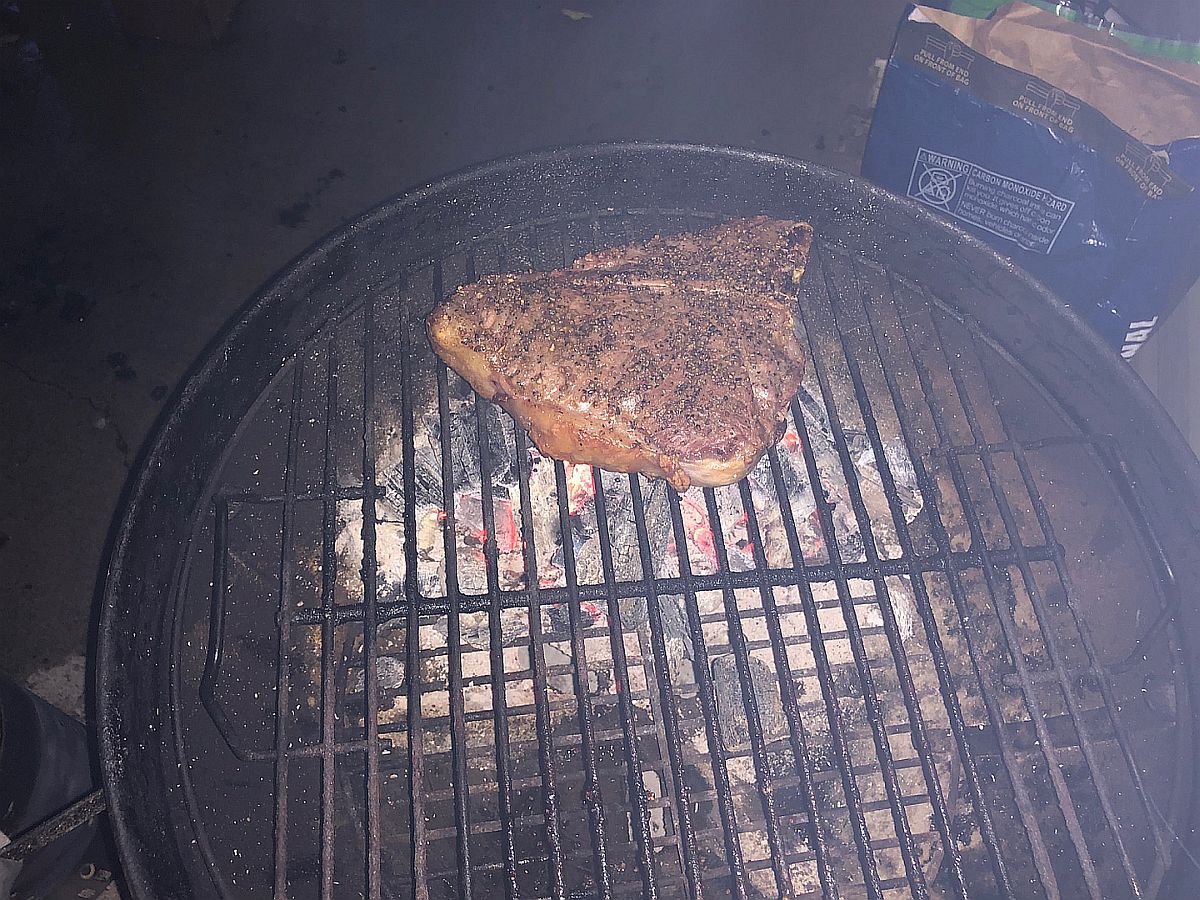
After the steak reached an internal temperature of 115 degrees, it was time to sear. I moved the steak directly over the coals and seared it for 2 minutes on each side – this will bring the internal temp up to about 125 – which is perfectly medium-rare.
One of the most crucial parts of the process, and one that most rarely do, is you must let the steak rest. When the steak sears, the meat tightens and the juices are all pulled to the center of the meat. When you let it rest, the steak pulls those juices back to the edges. If you want a perfect piece of

steak on every bite, make sure to let it rest a minimum of 5-10 minutes.
The end result? A medium-rare steak that has the same tenderness throughout the entirety of the steak. Paired with that fettuccine and a caesar salad, it was the perfect meal.


